An Inspiring Journey to OTA Chennai: A Report
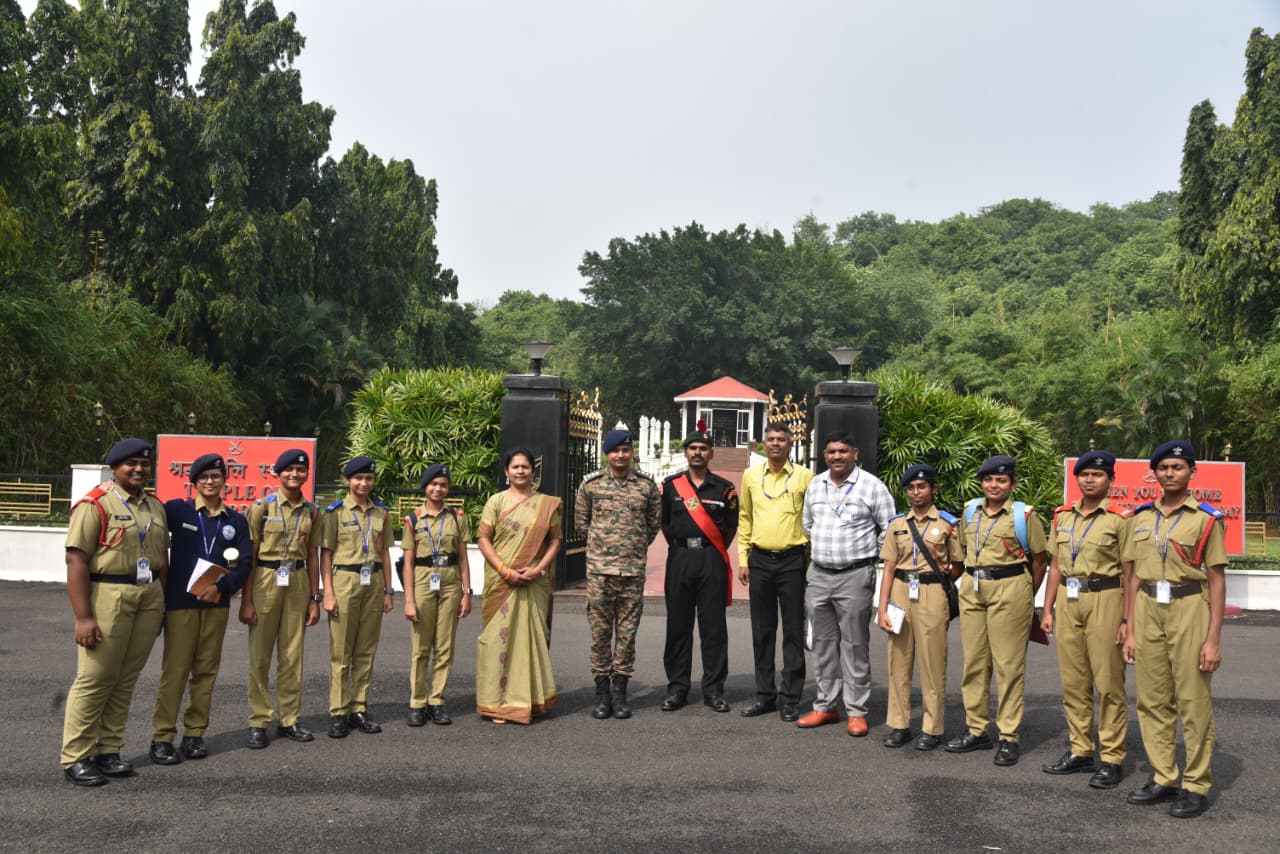
The educational and motivational tour undertaken by the Sainik School Kodagu cadets to Officer Training Academy (OTA), Chennai, from December 4th to 6th, 2025, was a resounding success and a profound source of inspiration. This three-day excursion was meticulously planned to give the young aspirants a first-hand experience of the life that awaits them in the Armed Forces, fostering a strong sense of patriotism and discipline.
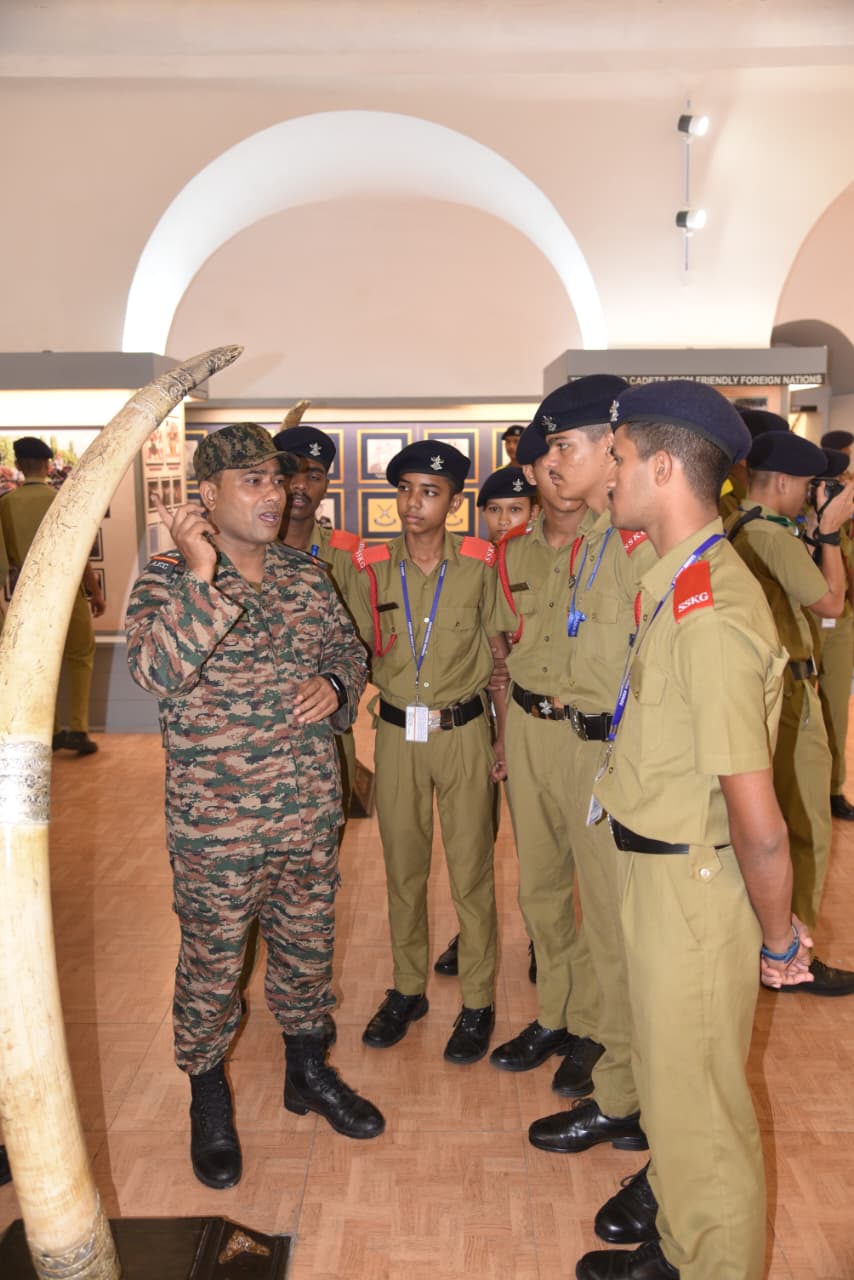
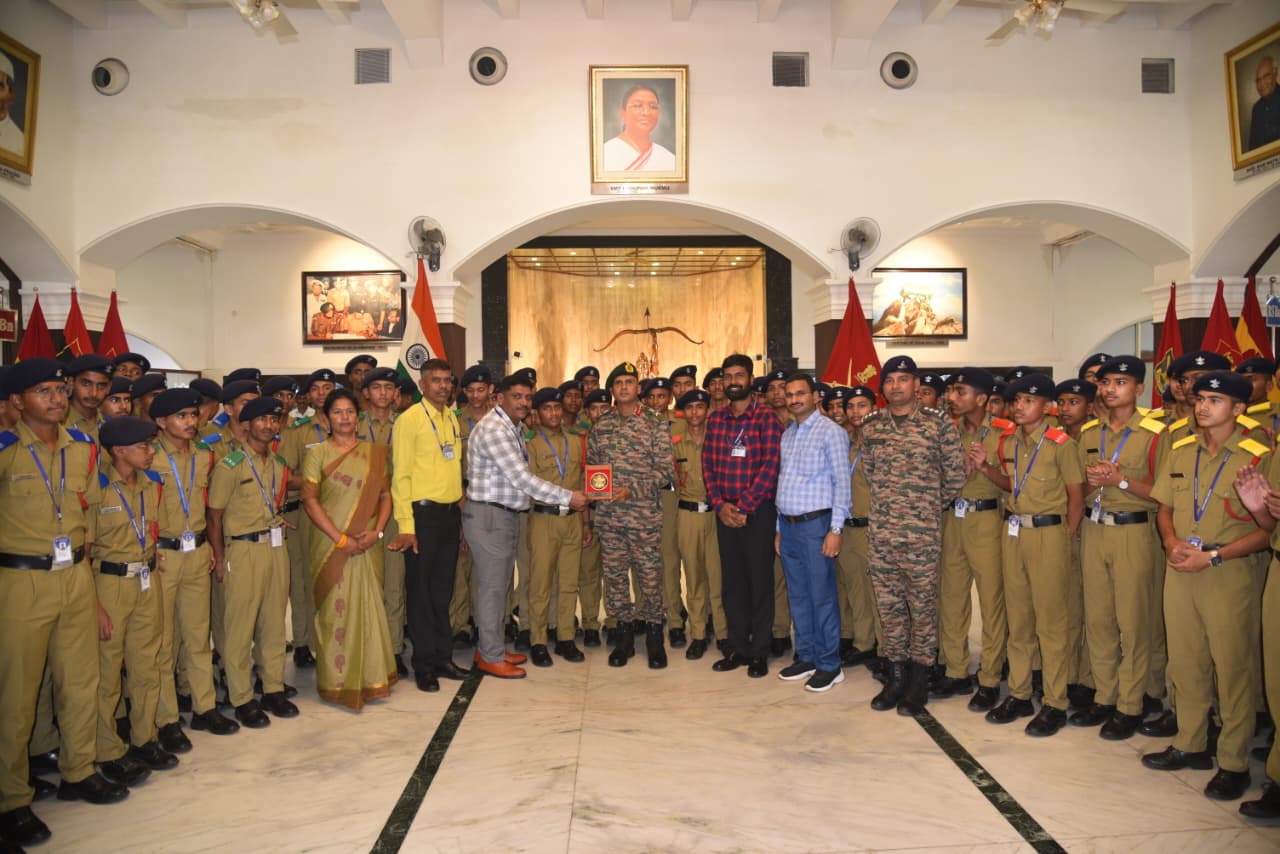
The highlight of the tour was the extensive visit to the prestigious OTA, Chennai, where the cadets witnessed the immaculate discipline and rigorous training standards of future officers. The cadets were given a comprehensive tour of the facilities, including the well-stocked Library and the informative Museum, which showcased the rich history and glorious traditions of the Indian Army. They also visited the impressive Cadets' Mess, observing the organized environment of the dining facility and experiencing the operational rhythm of the academy. A specially arranged video presentation further illuminated the diverse and demanding activities undertaken by the Gentleman and Lady Cadets.
The Commandant of OTA graciously addressed the contingent, delivering a powerful and motivational speech that emphasized the importance of character, leadership, and selfless service to the nation. Beyond the academy, the cadets experienced the cultural richness of Chennai, visiting the ancient temples of Mahabalipuram and the revered Anna Square. The entire contingent returned with an enhanced understanding of the military ethos, feeling energized and unequivocally motivated to pursue their dream of becoming officers in the Indian Armed Forces.
By
Mr Manjappa ,TGT Kannada



Event: Educational trip to Shravana Belgola , Halibedu and Beluru
Date: 11th Feb 2025
Venue: Destinations as mentioned in the tour plan
Report by: Mr Khyser Ahmed and Team
___________________________________________________________________


Shravana Belgola:
A group of 110 cadets and 5 staff members, led by Sqn Ldr Mohammad Shaji, the Vice Principal, Sainik School Kodagu embarked on an enriching educational trip to Shravanabelagola. we reached Shravanabelagola at 9:00 AM, where breakfast was served to the cadets. After breakfast, at 9:30 AM, the group began their journey towards the Bahubali statue. The Vice Principal played a pivotal role in guiding the cadets, especially in navigating the 600 steps leading to the magnificent 57-feet monolithic statue of Gommateshwara. Due to the unavailability of a guide at the location, he took the initiative to ensure that the cadets gained valuable insights. He facilitated discussions with the temple priests to uncover the history of Bahubali, the legacy of the Tirthankaras, and the profound principles of Jainism. Once the priest’s narration was complete, we returned to Shravanabelagola at 11:30 AM, where soft drinks were provided to the cadets. Afterwards, cadets were given a chance to explore the local market near the temple.
Halebidu:
At the Hoysaleswara Temple, he ensured that the cadets made the most of their visit by arranging two ASI (Archaeological Survey of India) guides to explain the beautiful sculptures and carvings on the temple walls. The cadets were divided into two groups, with each group being assisted by one guide.
The guides shared stories behind the intricate stone figures, which depicted scenes from Hindu mythology, gods, goddesses, animals, and daily life of the Hoysala period. The Vice Principal actively engaged with the cadets, making sure they understood the temple's history, the efforts behind its construction, and the rich culture of the Hoysala dynasty. His patience and enthusiasm helped the cadets appreciate the art, craftsmanship, and heritage of this ancient site in a meaningful way. After the visit to the temple, the cadets were taken to the museum to explore the artifacts, metals, and other items used during the dynasty.
Beluru:
The Vice Principal guided the escort staff to visit various locations on time by avoiding delay in transit time from Halebidu to Belur. Sir interacted with the cadets on architectural styles of Hoysalas. On arrival, cadets were asked to be keen on observing stone carvings that beautifully depicted various messages from the epics.
Learning outcomes: (Shravana Belgola)
I.Cadets explored the historical and spiritual significance of the Bahubali statue at Shravanabelagola, Karnataka.
II.They discovered that the Gommateshwara statue, built in 981 CE by Chavundaraya under the Western Ganga dynasty, stands as one of the largest monolithic statues in the world at 57 feet (17.4 meters) tall.
III.Cadets gained insights into Jainism's core values, as the statue of Bahubali symbolizes renunciation, self-control, and non-violence (Ahimsa).
IV.Every 12 years, a grand anointing ceremony, Mahamastakabhisheka, is held at the Gommateshwara statue.
V.During their educational tour, students learned the inspiring story of Bahubali and Bharata,
VI.Students discovered that the Bahubali statue is not alone but is surrounded by several other Tirthankara statues, each representing a revered spiritual teacher in Jainism. These Tirthankara idols, found in the temples and surrounding areas of Shravanabelagola, highlight the Jain heritage.
Learning outcome: Halebidu and Beluru:
History:
i.Halebidu, formerly known as Dorasamudra, Dvarasamudra, and Dvaravati, served as the capital of the Hoysala dynasty from the 11th to 14th century A.D. The dynasty was founded by King Sala, who gained power by defeating local chieftains.
ii.Over time, the Hoysala rulers expanded their kingdom through their bravery and military skill, successfully challenging the Yadavas, Cholas, and other dynasties. Among their greatest contributions to art and architecture, King Vishnuvardhana built the magnificent Halebidu temple, which remains a testament to Hoysala craftsmanship and heritage.
iii.Students saw the magnificent Hoysaleswara Temple, which consists of two Shiva temples—one dedicated to the king and the other to the queen.
iv.They learnt that the temple complex is a remarkable example of Hoysala architecture, showcasing extraordinary craftsmanship and intricate carvings.
v.The temple stands on a star-shaped platform, and its pillars are made from five types of stone, each intricately carved with floral and geometric patterns.
vi.The temple complex housed 74 exquisite sculptures, depicting various mythological tales and deities. However, during British rule, 60 of these statues were taken away, leaving only 14 sculptures in the temple today. Despite this loss, the remaining carvings continue to narrate significant episodes from Hindu mythology.
vii.Cadets witnessed the incredible sculptures at the temple, each depicting key stories from Hindu mythology.
(a)The Ramayana is illustrated with friezes, including the battle between Rama and Ravana
(b)Hanuman carrying the Sanjeevani mountain etc.
Beluru
The Chennakesava Temple in Belur, Karnataka, is a stunning example of Hoysala architecture and an important religious and cultural landmark.
It was built in the 12th century by King Vishnuvardhana of the Hoysala dynasty.
The temple is dedicated to Lord Vishnu, specifically in his form as Chennakesava, which means "handsome Vishnu."
Cadets saw intricate sculptures, detailed carvings, and the overall historical significance of the temple. Its design showcases the brilliance of ancient architecture and reflects the rich cultural heritage of the time.
These sculptures allowed students to appreciate the artistic brilliance and symbolism of Hindu mythology in the temple.
The educational trip to Shravana Belagola, Halibedu and Beluru provided the cadets with a unique opportunity to explore the deep cultural and historical roots of Karnataka. From the awe-inspiring Jain monolith at Shravana Belgola to the majestic Hoysala architecture in Halebidu and Belur, cadets gained a comprehensive knowledge and understood the region's religious, cultural, and architectural evolution. This exposure enhanced their appreciation for India’s diverse heritage.
Our class embarked on an enlightening educational trip to the Bangalore Parachute Regiment on 12th September 2024 with Mr. Raghavendra Raje Urs B, TGT English, and Ms. Rukmini M, Counsellor. This experience offered both educational enrichment and a deeper understanding of military life.

We arrived at the exemplary institution at around 10 in the morning, and throughout the visit, we were guided and briefed by SUB MAJ Surjit Singh and his staff. The visit began with a comprehensive briefing that provided valuable insights into the history and operations of the Parachute Regiment. This was followed by a detailed video presentation about the para commandos, showcasing their rigorous training and specialized skills. The visual presentation was particularly effective in bringing to life the challenges and achievements of these elite forces.


After learning all of this, we were guided to the pavilion, where we were provided with snacks, followed by lunch. The trip was a resounding success, thanks to the well-structured briefing and engaging presentations. It was a rare opportunity for students to gain firsthand knowledge about the Parachute Regiment’s role and significance. The combination of educational content and interactive elements ensured that the entire class remained captivated throughout the visit.
We were given a deadline of 10 PM to return to school, which we met, but not before we had an opportunity to shop at Reliance Mart in Mysore. The educational trip to Bangalore was an excellent experience. It not only broadened our understanding of military operations but also fostered a greater appreciation for the disciplined and heroic work of the para commandos. The informative sessions, coupled with the immersive experiences, made this trip both memorable and inspiring.
-CDT.Anvi Telesang, 1456
A field visit in around Kudige was organised for cadets of classes VII to X on 26 th September 2024, providing them with first-hand exposure to various aspects of their syllabus. The visit also aimed to offer them a relaxing break after completing their PA-II/Term-1 examinations.
Cadets visited a range of locations, including financial institutions, offices, manufacturing units, recreation centers and agricultural hubs and more. The experience was highly beneficial, as it allowed students to see the practical applications of their class room learning. Teachers too utilised this opportunity to make the syllabus more tangible and interactive.
Under the guidance of the teachers, the cadets explored society on a broader scale, visiting various social agencies and engaging directly with different sectors. This field visit effectively transformed the outside world into a classroom, enhancing their learning beyond conventional settings.
| Slno | Class | Visited Locations |
| 1 | VII | Nandini milk Dairy, Rice mill, Kudige Panchayat Office, Farmers’ co- op society |
| 2 | VIII | Canara bank, Kudumangalore Panchayat office, L&O Police station, Traffic Police station, Farmers’ co-op society |
| 3 | IX | Government paddy field, Harangi dam park, Harangi elephant camp, Snacks unit |
| 4 | X | Govt Poultry farm, Cow breeding centre, Vermi compost unit, Cement Brick and interlock unit |

1) Vice Principal’s address before field visits
2) Interaction with Canara bank staff and customers.

3) Cadets in Cement brick and Moulding unit, wondering how structures are made.

4) Class VII and VIII in Raja Rajeswari Farmers’ Co-operative society, as members
of the firm.

5) Busy with activities conducted at Kudige and Kudumangalore Gram Panchayat Offices.
 6) At Cow breeding and Vermi compost unit 7) Curious onlookers in a Rice Mill.
 8) IX class cadets and staff at Harangi Elephant camp and Harangi dam Park.
 9) Observing the milk process in Nandini Milk dairy.
 10) Class X cadets and teachers with health professionals at PHC Kudige.

11) At law and order Rural Police station.

12) At Traffic Police Station.
| Sainik School Kodagu Village & Post Kudige Kushalnagar Taluk Kodagu District Karnataka- 571232 Off. 08276 - 201005 |
|
|
|